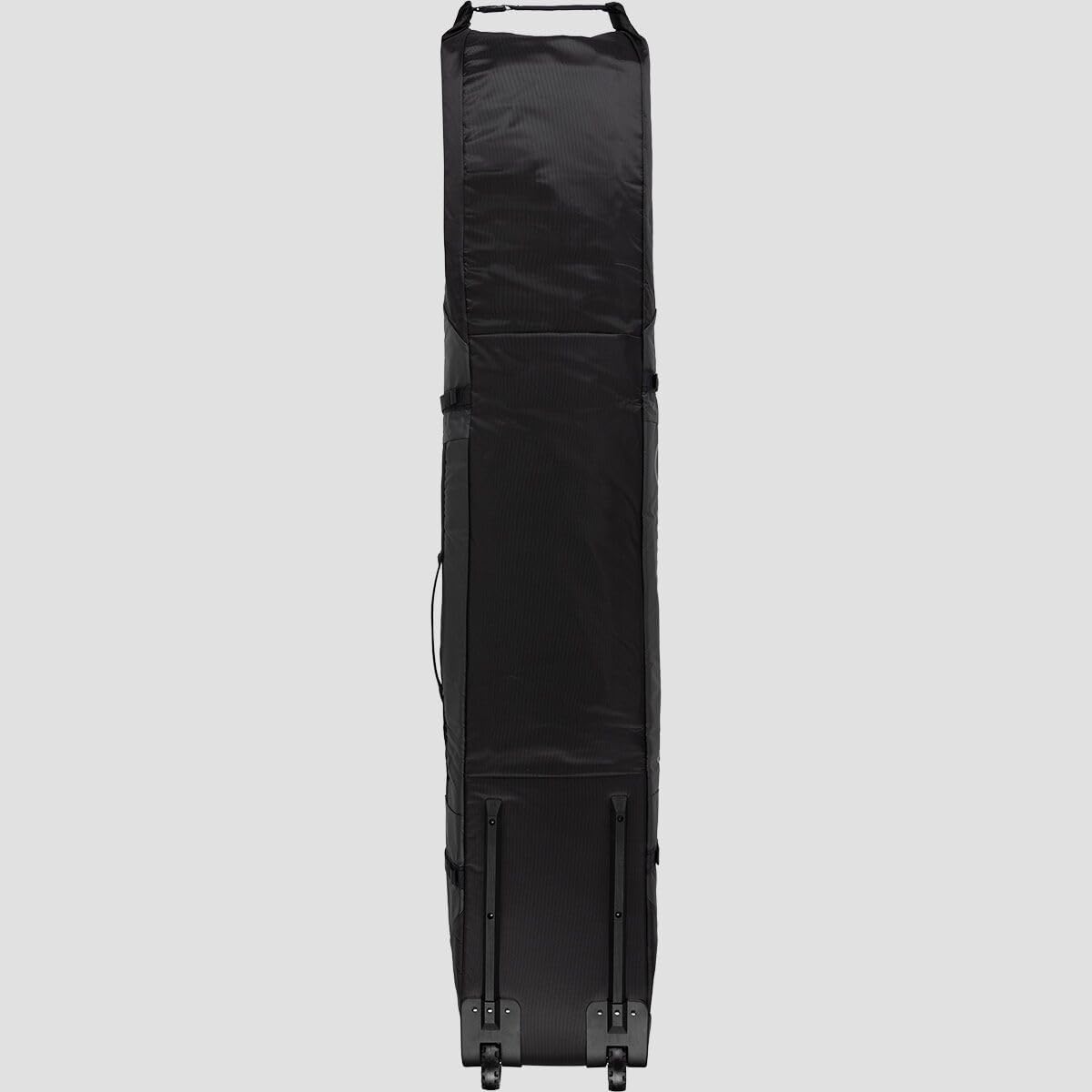
You spent real money on those skis. Maybe it was a pair of DPS Wailers or a set of ON3P Wrenegades — skis that cost more than some people’s first used car. Now you need to get them on a plane, into a shuttle van, or strapped to the roof of a rental car without turning your investment into a pile of delaminated topsheet and bent edges. That’s what ski bags and boot bags are for: protective sleeves or hard-shell cases that hold your skis (and poles) or your ski boots during transport. A basic ski bag is just a padded sleeve with a zipper. A premium wheeled ski bag is more like soft luggage engineered specifically for the awkward dimensions of ski gear. This guide breaks down which level of protection is actually worth paying for, how to match a bag to your travel style, and where the money is genuinely well spent versus where you’re just paying for a brand name.
The Core Decision: Padded vs. Wheeled vs. Hard-Shell
Let’s anchor the decision in what you’re actually protecting against. Airline baggage handling is the worst-case scenario — bags get thrown, stacked, and compressed. A car-top ski quiver going to Snowbird for a long weekend faces completely different risks (primarily moisture and minor scratches) than skis being checked through a connection in Denver.
Basic padded ski bags are exactly what they sound like: a zipper sleeve with a thin layer of foam or fleece lining. They run $40–$120 and do a decent job protecting topsheets from scratching against each other and keeping tips and tails from direct hard contact. Outside Online’s 2025 ski bag review notes that basic padded bags are “perfectly adequate for car travel and short resort hauls” but grades them down for airline use because the padding typically runs under an inch and won’t absorb a baggage handler dropping your skis tip-first onto a concrete floor.
Wheeled padded ski bags — the most popular category for serious travelers — add a rolling base, often an external frame, and substantially thicker foam padding (typically 10–20mm at the ski contact points). Bags in this category from brands like Dakine, Black Crows, and Volkl run $180–$400. Wirecutter’s updated 2025 guide consistently returns to this category as the “sweet spot” for fliers who check skis regularly, citing the combination of portability, airline-friendliness, and protection depth. Skis up to 195cm typically fit in bags rated for that length; always check your longest ski’s actual measured length against the bag’s listed capacity — manufacturers pad the stated length on some bag models.
Hard-shell ski cases are the aviation-grade option: rigid polymer or aluminum shells that protect against the kind of impact that would destroy a padded bag. They run $500–$1,200+, weigh significantly more empty, and most airlines count them as oversized baggage regardless. Ski Magazine’s 2024 travel guide puts it plainly: “unless you’re traveling with irreplaceable custom equipment or doing 20+ airline trips per season, the hard-shell cost-and-weight math rarely adds up.”
By the Numbers
| Bag Type | Typical Price Range | Padding Depth | Best Use Case |
|---|---|---|---|
| Basic padded sleeve | $40–$120 | 5–10mm | Car travel, resort day-trips |
| Wheeled padded bag | $180–$400 | 10–20mm | Airline checked bags, most travelers |
| Hard-shell case | $500–$1,200 | Rigid | High-value quivers, 20+ flights/season |
Boot Bags: The Underrated Half of the Equation
Ski boots (the stiff plastic shell that clips into your binding — not the soft liner alone) are weirdly hard to transport well. They’re dense, heavy, and awkward-shaped, and a lot of skiers just throw them into a duffel or the ski bag’s bottom pocket and call it good. That works until it doesn’t: a boot sole can crack under hard compression, and buckles are impressively good at destroying everything around them in a bag.
A dedicated ski boot bag does three things: it isolates the boots so buckles don’t shred other gear, it provides a moisture-wicking or ventilated environment (wet liners are a real problem for multi-day trips), and it keeps the dense weight of boots from migrating inside a ski bag and shifting the load balance.
Entry-level boot bags ($30–$60) are essentially a single-compartment bag sized for two boots. Powder Magazine’s winter 2024–25 roundup calls these “the minimum acceptable solution” — functional but lacking in ventilation and usually too tight for boots with aftermarket footbeds or thick custom liners.
Mid-tier boot bags ($60–$120) add a ventilated mesh panel or separate compartment for wet liners, external pockets for gloves or a helmet, and enough capacity to actually fit modern ski boots, which have gotten progressively bulkier as last-shapes have widened. Dakine’s Boot Bag 50L and the Black Diamond Circuit Boot Bag are consistently mentioned in this tier across aggregated reviews. Owners report that the ventilated panel makes a real difference on multi-day trips where you’re trying to dry liners overnight.
Premium boot bags and combo packs ($120–$250) are often sold as part of a ski-and-boot bag system, bundled from the same brand. The value proposition is ergonomic: they’re designed to stack or attach to each other, which matters when you’re navigating an airport with 40 lbs of ski gear. If you’re flying with skis more than four or five times a season, the integrated system is worth considering on convenience alone.
One often-overlooked detail: boot bag capacity is listed in liters, and there’s no standardization. A “boot bag” listed at 35L may fit a women’s size 8 boot comfortably and nothing else. A size 30 mondo boot (roughly a men’s US 12) in a wide alpine touring shell needs 45–50L minimum, ideally 55L if you carry the liner separately for drying. Check the listed capacity against your boot’s shell size before buying.
Matching the Bag to How You Actually Travel
The single biggest mistake in this category is buying for an idealized travel style rather than your actual one. Here’s the decision framework:
You drive to the mountain most of the time and fly 1–3 times per season. A mid-tier wheeled padded ski bag ($200–$280) and a ventilated boot bag ($70–$100) is the right combination. You’re not flying enough to justify a hard-shell, and the wheeled bag handles airline check-in with enough protection for occasional use. Wirecutter’s guide flags that most damage happens not from a single catastrophic drop but from the cumulative effect of bags being shuffled across conveyors repeatedly — padding depth matters more than rigid protection for this use profile.
You fly 6+ times per season or travel internationally with your skis. Now the math shifts. Airline oversized baggage fees for ski bags run $75–$200 per direction depending on carrier and destination — and that’s before any damage claims. A premium wheeled bag with substantial padding ($300–$400) makes more sense as a capital investment than repeatedly gambling with a $150 bag. Outside Online’s review notes that bags in this tier from brands like Völkl, K2, and Thule show meaningfully fewer stress failures at the zipper and wheel mounts — the components most likely to fail with heavy airline use.
You’re a splitboarder or ski tourer carrying an AT (alpine touring) setup. Your binding system — whether a Dynafit TLT, G3 Ion, or Marker Kingpin — has tech toe and heel pieces that are more exposed and more expensive to replace than a piste binding. Ski Magazine’s 2024 guide recommends padding those binding areas with foam pipe insulation or a dedicated binding protector (cheap, widely available at hardware stores) inside any padded bag. The binding is the component most likely to take damage in transit, and it’s often not covered under airline damage claims because it’s considered part of the ski’s structural assembly.
You’re traveling with a quiver. If you’re bringing two pairs of skis — say, a groomer carver and a fat powder ski — you need a bag rated for two pairs or a bag explicitly sized for double-ski capacity. Most padded wheeled bags list a single-pair or double-pair spec. Double bags add weight fast; some owners report double-ski padded bags pushing 10–12 lbs empty, which matters if you’re already at checked-bag weight limits.
What Actually Gets Damaged and How to Prevent It
Across aggregated owner reviews on ski-specific forums and retailer Q&A sections, the damage patterns are consistent:
Tip and tail damage is the most common. The last 10–15cm of a ski is both the most structurally vulnerable and the point most likely to take a direct impact from being stood upright on a baggage conveyor. A bag with reinforced tip-and-tail zones — usually a rubber or dense foam cap at each end — provides meaningful protection here. This is worth paying for specifically; not all padded bags include it.
Topsheet scratching is cosmetic but demoralizing on a new pair. Even cheap bags with fleece lining solve this problem adequately. It’s not a reason to spend more.
Binding damage is the expensive one. As noted above, padding around tech fittings before bagging is worth the five minutes it takes.
Zipper and wheel failure on the bag itself is the failure mode that makes a bag useless mid-trip. Owners consistently flag that bags under $150 with single-layer zipper pulls and plastic wheel assemblies start to fail after 10–15 airline cycles. If airline travel is a regular part of your ski season, spending up to $250–$350 on the bag body is legitimate durability insurance.
The Honest Bottom Line
If you’ve got $1,500+ in skis and you’re flying to ride them, a $40 sleeve bag is the wrong call — the math on that is simple. But you also don’t need a $900 Pelican-style hard case unless you’re a professional athlete or a guide with genuinely irreplaceable custom equipment.
Our editorial read: for most serious intermediate and advanced skiers flying 3–8 times per season, a wheeled padded bag in the $220–$350 range paired with a ventilated boot bag in the $80–$120 range is the defensible, durable solution. Spend at the top of that range if you’re traveling internationally or checking skis through busy hub airports regularly. Save toward the bottom if most of your travel is domestic direct flights to mountain towns where baggage handling is typically gentler.
If X is occasional car travel with one or two flights per season → a basic padded sleeve and any boot bag with ventilation gets you there. If X is frequent flying with a high-value quiver → invest in a wheeled padded bag with reinforced tips and a ventilated mid-tier boot bag, and treat it as part of your gear budget, not an afterthought.
See today’s best prices on wheeled ski bags and ventilated boot bags to compare current models in the tiers above before the shoulder-season inventory shifts.