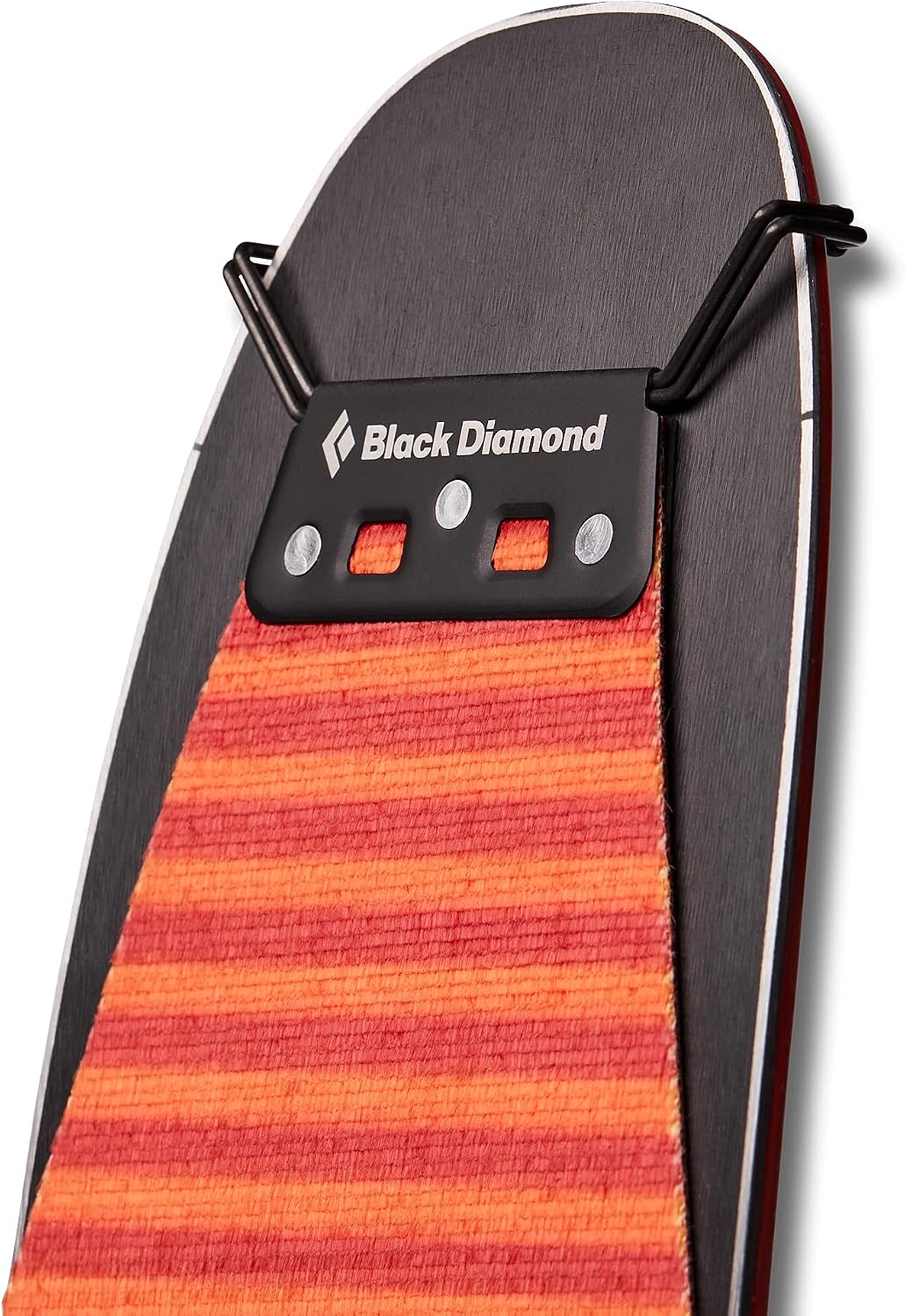
You bought the beacon. You got the shovel and probe. You’ve done an avy course. Now you’re standing at the trailhead at 6 a.m., skis on, and someone asks: “Are your skins cutting out on the traverse?” You nod confidently, even though you’re not entirely sure what that means yet. That’s fine — everyone starts here. Climbing skins are the strips of fabric (historically made from seal fur, now synthetic mohair or nylon) that attach to the base of your skis and grip the snow on the way up, allowing you to walk uphill without sliding backward. Touring poles are adjustable poles, usually with a folding or telescoping mechanism, that give you push and rhythm on the climb and then shorten or collapse for the descent. Together they form your uphill system, and getting both of them wrong on the same day is a fast way to turn a dream objective into a survival shuffle. This guide breaks down exactly what to look for, what the tradeoffs actually cost you, and how to make the call for your specific setup.
Why the Uphill System Deserves as Much Attention as Your Skis
Most skiers new to the backcountry spend 90% of their gear budget on the ski and binding system — the Dynafit Beast, the G3 Ion, the Marker Kingpin — and treat skins and poles as an afterthought. That’s backwards. On a full touring day you might spend three to five hours climbing and forty minutes descending. The uphill system is where your body lives.
Poor skin choice affects you three ways. First, glide: a skin with too much nylon content will drag on the flats and make you feel like you’re towing a sled. Second, grip: on steep rollover terrain — anything above 25 degrees — an under-specified skin will send you sliding backward, which, beyond being demoralizing, is a genuine avalanche hazard per the avalanche.org Know Before You Go backcountry overview. Third, weight: every extra 100 grams on your ski tips multiplies across thousands of steps. Outside Online’s climbing skin buyer’s guide notes that the weight delta between a mohair-blend skin and a full nylon skin on a 185cm ski can exceed 150 grams per ski — 300 grams total that you’re lifting with every stride.
Touring poles have a similar hidden impact. A too-heavy pole saps your arm swing efficiency. A basket that’s too small punches through wind crust. A locking mechanism that rattles loose mid-descent puts you in a lurch when you need a stable plant on variable Coastal BC snow. These aren’t edge cases. Teton Gravity Research’s ski touring gear review archive is full of real-world accounts where cheap pole locks failed on wet spring snow transitions.
Climbing Skins: Fabric, Fit, and the Glide-Grip Spectrum
The fabric decision is the real one. Skins are made from three primary materials: full mohair, nylon-mohair blends (typically 65/35 or 70/30), or full nylon. Each sits at a different point on the grip-glide tradeoff.
| Fabric | Glide | Grip | Best For |
|---|---|---|---|
| Full mohair | Excellent | Moderate | Groomed touring, low-angle objectives |
| 65/35 mohair-nylon blend | Good | Good | All-around backcountry, variable snow |
| Full nylon | Poor | Excellent | Steep technical terrain, wet snow |
Powder Magazine’s backcountry gear essentials piece calls the 65/35 blend “the workhorse choice for most recreational tourers” — and it’s hard to argue. If you’re lapping Wasatch sidecountry where you’re skinning moderate ridgelines and ripping descents in deep January powder, a blend skin is the answer. If you’re grinding mellow Nordic-style tours on groomed skin tracks, full mohair rewards patience. If you’re boot-packing wasn’t enough and you’re crossing steep, unconsolidated Sierra cement in March, full nylon keeps you from going sideways.
Skin width matters more than people admit. Skins are sized to your ski’s waist width — not its tip width. The general rule is to size for coverage between 60–90% of the ski’s running surface (the part that touches snow), leaving a small strip of base exposed on each edge to maintain ice-edge engagement on traverses. Undersized skins on a wide-waist ski (90mm+) lose that edge bite. Oversized skins fold at the edges and ball up in wet snow. Brands like Black Diamond, Pomoca, and G3 all produce tip-and-tail attachment systems; check that the attachment hardware is compatible with your ski’s tip notch geometry before you buy — especially on rockered skis where the tip notch can be set well back from the actual tip.
The glue question. Skin glue degrades over time and behaves differently across temperature ranges. Cold-condition glue (formulated for sub-zero to around -10°C) stays tacky in Wasatch powder temperatures but can pull off paint on warmer Coastal BC days. Warm-condition glue is the inverse. Most major skin manufacturers now offer glue that spans a wider range, but owners across aggregated reviews on skimag.com consistently flag one issue: glue performance drops significantly after three to four seasons of heavy use, and re-gluing kits, while functional, rarely restore day-one adhesion. Budget a re-glue or replacement into your year-three ownership math.
By the numbers — skin weight on a 182cm / 108mm waist ski:
- Full nylon (e.g., Black Diamond Ascension Nylon): ~540g per pair
- 65/35 blend (e.g., G3 Alpinist): ~410g per pair
- Full mohair (e.g., Pomoca Climb Pro S-Glide): ~340g per pair
That 200g gap between nylon and mohair is roughly the weight of a Petzl headlamp. Over 1,000 vertical feet of gain, it’s meaningful.
Touring Poles: Adjustability, Weight, and Lock Reliability
Touring poles aren’t ski poles with a different grip color. Three characteristics separate them from resort poles: adjustability (so you can shorten for steep ascents, lengthen for traverses, and collapse for the descent), a locking mechanism that holds under load, and a basket system that converts between powder mode and hard-pack mode.
Adjustability formats. Touring poles come in two configurations: telescoping (two or three sections that slide and lock) and folding (hinged sections with a cord tensioning system, similar to trekking pole design). Telescoping poles offer infinite length adjustment across their range, which is genuinely useful when you’re dialing in your uphill stride position. Folding poles collapse to a more packable length for couloir descents or lift-accessed objectives where you’re stuffing them into a pack, but the hinge points introduce a potential failure mode that ski mag’s touring pole comparison piece flags as worth inspecting seasonally — the connecting cord wears with UV and repetitive flex stress.
Lock mechanisms: the underrated spec. Flick-lock mechanisms (lever-style external clamps) are generally more reliable in cold and wet conditions than twist-lock systems. Twist locks can ice up, loosen unnoticed under load, and — per Teton Gravity Research’s field accounts — occasionally compress several centimeters in the middle of a steep descent without warning. If you’re buying poles in the $80–$150 range, prioritize a quality flick-lock over shaving 20 grams. At the $200+ tier, brands like Black Diamond and Leki engineer their lock systems to handle the lateral force of an aggressive pole plant on hardpack without creeping.
Weight vs. durability. This is the same tradeoff you face with ski construction. Carbon poles (Black Diamond Helio, Leki Sherpa Lite Carbon) come in under 300g per pole and absorb vibration beautifully. Aluminum poles run 350–500g but will bend rather than snap if you catch a pole plant in a rock on a variable-snow Coastal BC day. The Outside Online climbing skin and pole guide recommends carbon for dedicated touring-light setups and aluminum for all-mountain or aggressive resort-and-sidecountry use where poles take abuse. If you’re building a dedicated touring quiver, carbon is worth the spend. If these poles are doubling as your resort poles, aluminum is more honest.
Basket sizing. Powder baskets (large diameter) are essential in soft Sierra or Wasatch snow — a small tech basket punches through to the elbow with every plant. Hard-pack or touring baskets (small diameter) are cleaner for skinning and firm-snow descents. Most poles ship with interchangeable baskets; confirm this before purchase.
Putting the System Together: If X, Then Y
Here’s where the practitioner thinking pays off. Match the skin and pole choice to your actual objectives, not your aspirational ones.
If your primary terrain is lift-accessed sidecountry and short skin approaches (under 1,500 vertical feet): A 65/35 blend skin sized precisely to your ski’s waist, paired with a mid-weight aluminum telescoping pole with flick-locks, covers nearly every scenario you’ll encounter. You don’t need the weight penalty of full nylon or the fragility of full carbon. Skin weight matters less on short tours; lock reliability matters more when you’re doing frequent adjust-and-collapse transitions.
If your primary terrain is multi-day Wasatch or Sierra touring with significant vert: Full mohair or a high-mohair blend earns its cost in the efficiency dividend across long days. Pair this with carbon folding poles in the 280–320g range. The weight savings compound over 4,000+ feet of gain. Spend the premium here.
If your objectives include steep technical Coastal BC lines or wet spring snow: Go full nylon skins — the grip reliability on 35-degree wind-loaded slopes is not a place to compromise. Aluminum poles with large powder baskets handle the variable wet-heavy snow better than carbon, which can feel chattery in spring conditions. Avalanche.org’s backcountry overview is clear that steep-terrain travel decisions cascade; your uphill system should give you zero reason to pause on a traverse.
If you’re still in your first two seasons of touring: Buy the blend skin and mid-range aluminum pole, ride them for a full season, and let your actual terrain use tell you what you wish you had. Every experienced tourer who’s given this advice honestly says the same thing: the first season teaches you more about your preferences than any spec sheet, and reselling a season-used aluminum pole costs you less than reselling carbon.
The uphill system won’t make the Instagram highlight reel. But on the third hour of a skin track when your legs are burning and the summit is visible, smooth glide, solid grip, and poles that lock where you set them are exactly what you’ll be grateful for. See today’s best prices on G3 Alpinist skins, Black Diamond Helio poles, and Pomoca Climb Pro skins at major specialty retailers — prices on carry-over skin models tend to drop 20–30% in May and June as shops clear pre-season inventory, so this is a reasonable window to buy.