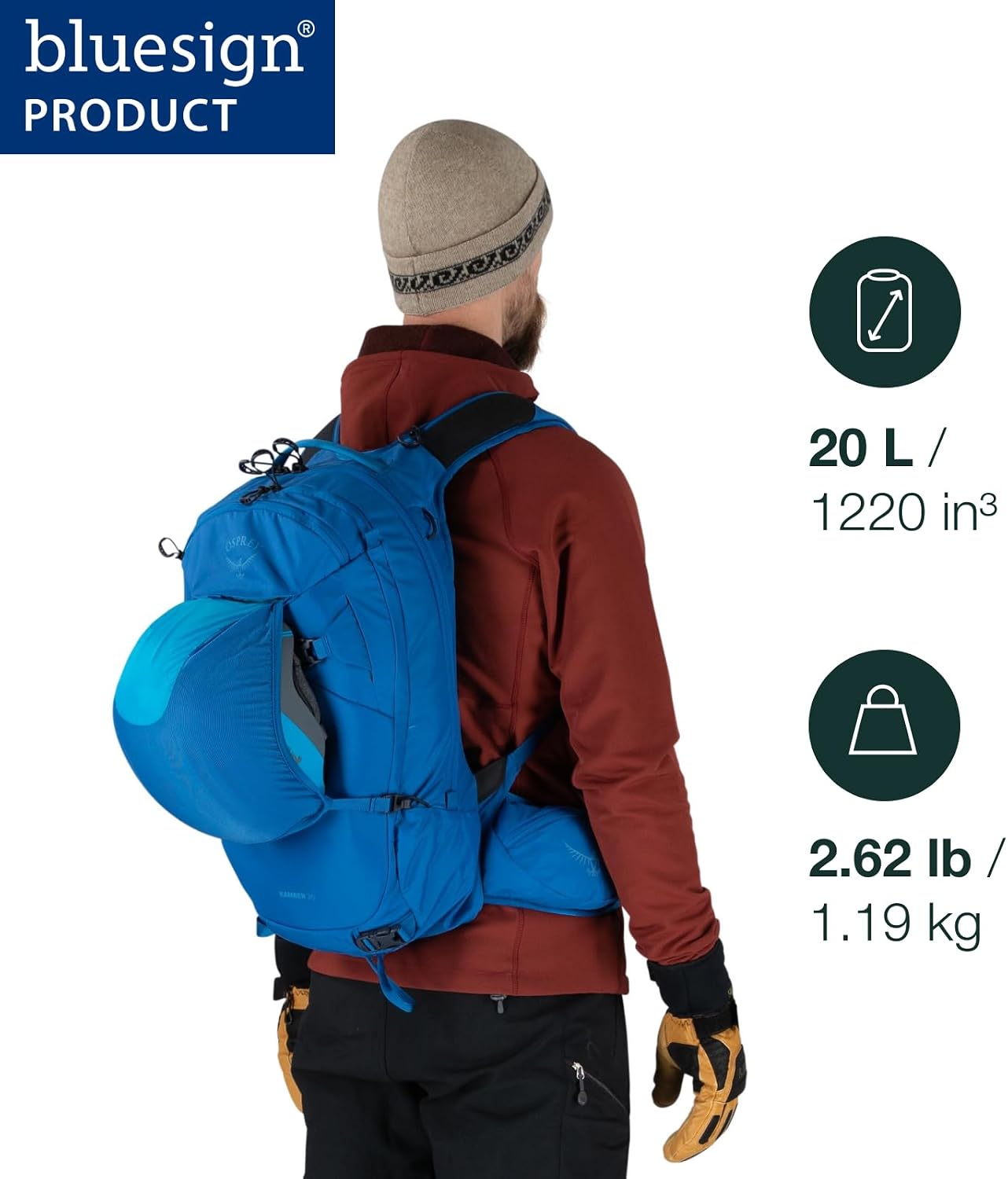
If you’re planning your first real backcountry ski day — meaning you’re leaving the resort boundary, traveling through uncontrolled avalanche terrain, and making your own decisions about where and when it’s safe to ski — your pack is more than a bag. It’s your emergency response system. A backcountry pack carries the three tools every rider in avalanche terrain needs: a beacon (a radio-frequency device that lets rescuers find a buried person), a probe (a collapsible pole used to locate a buried victim precisely), and a shovel (purpose-built avalanche shovels are dramatically faster than any improvised digging). Beyond those essentials, some packs add a fourth layer of protection: an airbag system designed to keep you near the surface if you’re caught in a slide. This article will help you decide whether you need that airbag system, how to think about pack organization for your rescue tools, and how much total volume you actually need for the days you’re planning.
If you’ve already done a few seasons of sidecountry laps and you’re now eyeing multi-day ski tours or serious Wasatch or Coastal BC objectives, the stakes on this decision just went up. Read on — we’ll walk through the tradeoffs, name the math, and give you a clear decision framework at the end.
| EDITOR'S PICKCore Avalanche Kit | Mid-tier[Ortovox Tour Rider 30L Ski Tour…](https://www.amazon.com/dp/B0B2YJ9J72?tag=greenflower20-20) | Budget pick[Unigear Ski Hydration Backpack](https://www.amazon.com/dp/B08HQLY1W3?tag=greenflower20-20) | |
|---|---|---|---|
| Capacity | — | 30L | 30L |
| Avy tool included | ✓ | ✗ | ✗ |
| Hydration bladder | ✓ | — | — |
| Material | — | — | 900D Polyester |
| Price | $179.00 | $108.00 | $47.99 |
| See on Amazon → | See on Amazon → | See on Amazon → |
Airbag Packs vs. Standard Packs: The Honest Tradeoff
Let’s start with the question everyone asks: Is an airbag worth it?
The airbag premise is grounded in real avalanche science. When a slab avalanche tumbles, larger objects tend to migrate toward the surface through a phenomenon called inverse segregation — the same physics that brings big rocks to the top of a shaken gravel pile. An airbag (typically 150–200 liters of deployable volume) inflates in 2–3 seconds, dramatically increasing your effective size and improving the odds you stay near the surface where rescuers can find you. The American Avalanche Association’s Avalanche Handbook, 4th Edition discusses studies suggesting airbag deployment reduces burial depth in many avalanche scenarios, while also noting clearly that no technology replaces terrain judgment.
That qualifier matters more than any gear specification. An airbag does not help you survive a terrain-trap burial, a slide that hits trees, or a situation where the bag fails to deploy in time. The avalanche.org Know Before You Go educational resources are explicit on this point: the airbag is a secondary mitigation tool, not a replacement for conservative terrain choices and a practiced rescue protocol with your partners.
So here is the honest version of the tradeoff, broken into three tiers.
Standard Pack: The Skill-Builder’s Choice
A well-organized standard pack in the 25–32L range is the right starting point for most intermediate backcountry skiers. Every dollar not spent on an airbag canister is better invested in an AIARE Level 1 course, a higher-quality beacon, or more days in the field building terrain judgment. Powder Magazine’s Backcountry Pack Buyer’s Guide, 2024–25 season is direct about this priority: rescue skills and terrain selection are the primary variables in avalanche survival, and a practiced rescue team with a standard pack outperforms an untrained team with airbag packs.
Best for: Skiers under 30 days per season in backcountry terrain, those still building rescue skills, lower-angle objectives, and anyone where the cost premium is better redirected to education.
Weight advantage: 0.8–1.4 kg lighter than a comparable airbag pack, depending on canister type.
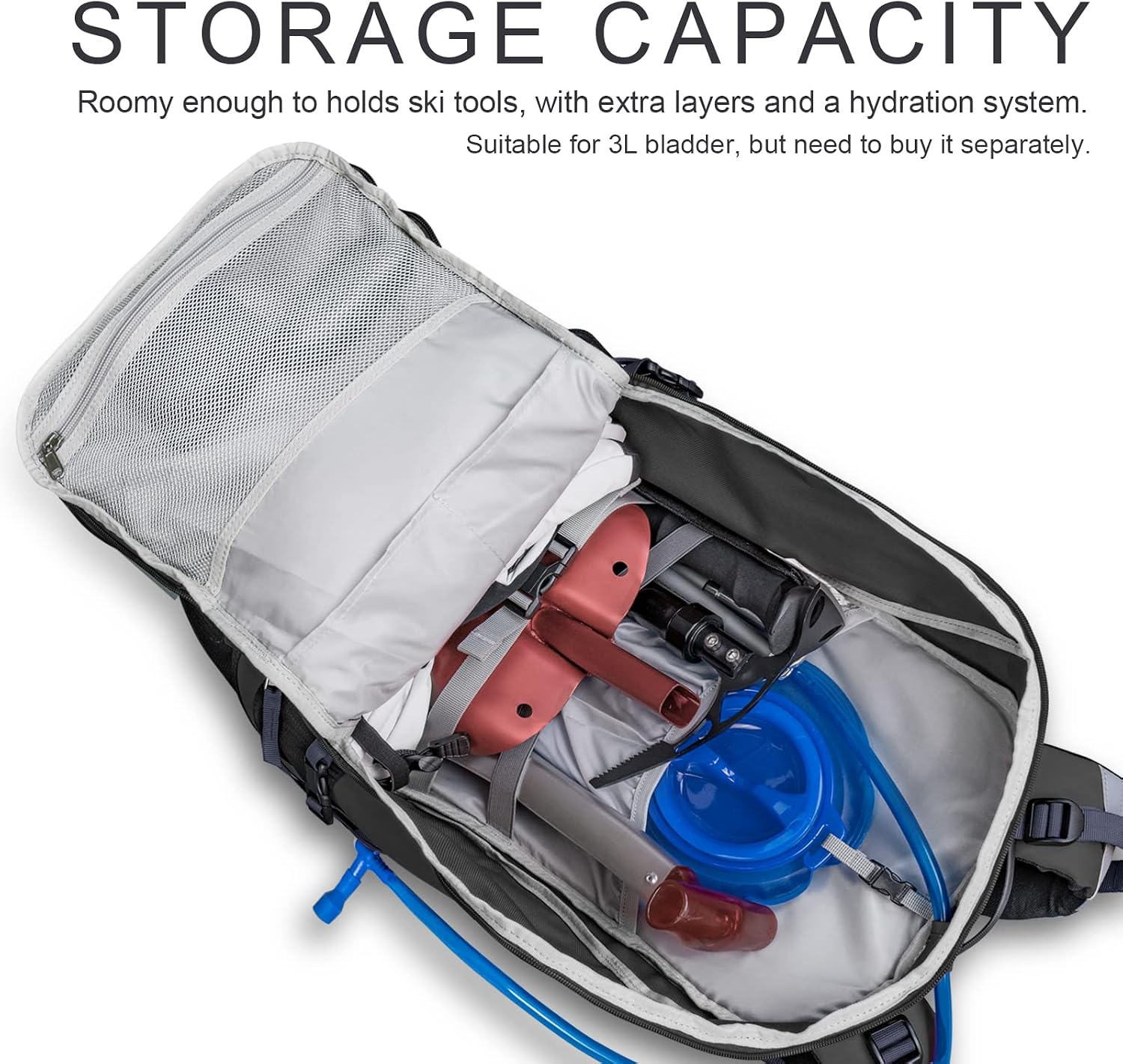
Unigear
$47.99
In stock on Amazon
Check price on AmazonMid-Tier Airbag Pack: The Frequent Tourer’s Case
At 30 or more days per season in avalanche terrain, skiing sustained steeps with trained partners, the airbag becomes defensible. The Mammut Free 28 Rider sits at this tier. Outside Online’s Best Avalanche Airbag Packs, 2025 gear review specifically calls out its probe access as a differentiating “no-fumble” feature. At this tier, compressed-gas canisters remain proven and cost-effective, though they require refilling at a dive shop or specialty outdoor retailer after a deployment — and cannot travel charged on commercial flights.
Best for: Experienced day-tourers skiing consequential terrain, 30+ days per season, partners who practice rescue sequences regularly.
Cost premium over comparable standard pack: Approximately $400–$700 depending on brand and canister type.
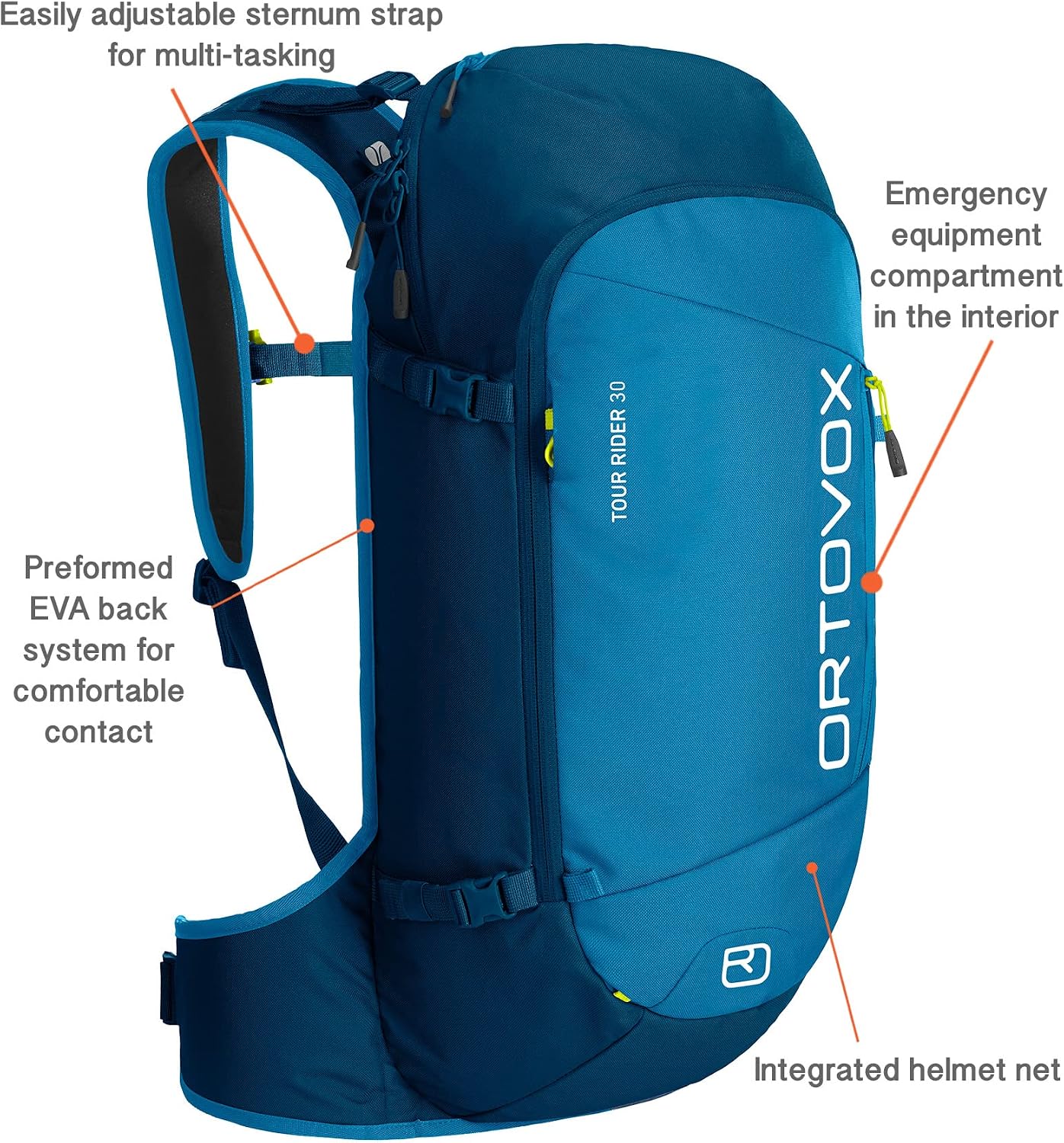
Ortovox
$108.00
In stock on Amazon
Check price on AmazonPremium Airbag Pack: The Electric-System Advantage
Electric and fan-based airbag systems — the Black Diamond Jetforce Tour 26L and Mammut’s Alpride E2-equipped packs being the primary examples — solve the travel logistics problem entirely. You fly with a battery, not a pressurized canister. Teton Gravity Research’s Airbag Pack Comparison Feature, 2025 flagged electric and hybrid systems as the direction the category is moving, citing repackability in the field after deployment as a meaningful operational advantage over compressed-gas systems. The early-generation cold-weather battery concern (lithium batteries lose meaningful capacity below -10°C) has been substantially addressed in current Alpride E2 systems per manufacturer specifications and independent testing referenced in that same feature.
Best for: Guides, mountain professionals, frequent travelers to Coastal BC or international ski destinations, and skiers on technical lines where repackability after deployment matters.
Weight note: Electric systems add approximately 200–400 g over compressed-gas equivalents but eliminate canister logistics entirely.
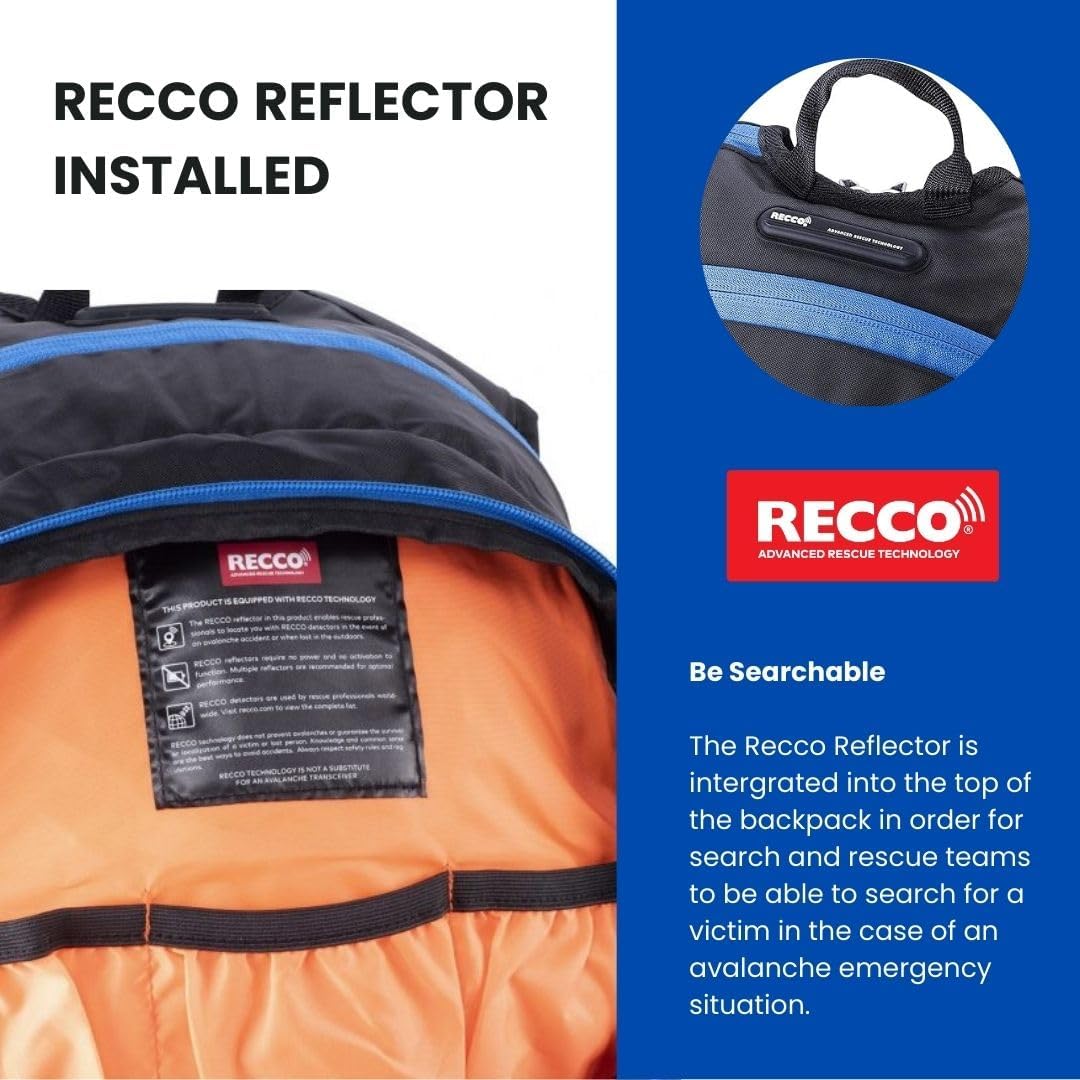
Core
$179.00
In stock on Amazon
Check price on AmazonAvalanche Tool Integration: Where Organization Becomes a Safety Feature
Here is the piece of pack design most buyers underweight: how fast can you pull your shovel and probe when your partner is buried?
Survival probability in an avalanche burial drops sharply after 15 minutes, according to data discussed in the American Avalanche Association’s Avalanche Handbook, 4th Edition. That means the rescue sequence — locate with beacon, probe to confirm depth, dig — needs to happen fast. Your pack’s organization is part of that timing. A fumbled zipper or a probe buried under a hydration bladder costs time you do not have.
What to look for:
Dedicated avy tool pockets. The probe and shovel handle should each have their own dedicated pocket, accessible without opening the main compartment. Packs from Black Diamond (the Cirque series), Mammut, and Ortovox are consistently cited by backcountry guides for probe and shovel organization that works reliably with gloves on. Outside Online’s Best Avalanche Airbag Packs, 2025 gear review names fast probe access as one of the top differentiating criteria evaluated in that roundup.
Shovel blade placement. Some packs require opening the main compartment to retrieve the shovel blade — a meaningful slowdown under stress. Look for systems where the blade is in a quick-access side pocket or strapped to the exterior. Under stress and in cold, every extra zipper is a liability.
Hydration vs. avy tool separation. Some packs use a hydration sleeve that doubles as the avy tool zone. Owners consistently flag this as a frustrating compromise: removing the bladder to access the probe is the exact wrong tradeoff for a safety-critical pocket. Verify the two systems are genuinely independent before purchasing.
Hip belt pockets. Teton Gravity Research’s Airbag Pack Comparison Feature, 2025 notes that hip belt pockets are increasingly standard on packs above 25L but remain inconsistent on sub-20L day packs. Beyond convenience, hip belt pockets are the logical home for a touring map, lip balm, and a snack on a long skin track — keeping the main compartment organized for safety gear.
Volume: Matching the Pack to the Day
Volume is measured in liters, and the right range depends almost entirely on what kind of day you’re planning. Here is how the tiers break down in practice.
Sub-20L: Sidecountry and Short Laps
At this size you are carrying beacon, probe, shovel, one layer, water, and snacks. That is genuinely it. These packs work well for skiers who are primarily resort-based and occasionally exit the boundary for a lap or two on familiar terrain. They are light and do not compromise skiing. Powder Magazine’s Backcountry Pack Buyer’s Guide, 2024–25 season describes sub-20L packs as appropriate for “a few hours in familiar, low-commitment terrain” — not all-day objectives or any trip where conditions could change and force an unplanned overnight.
20–32L: The Day-Tour Sweet Spot
This is the range most serious day-tourers land on. The Black Diamond Cirque 32 and the Ortovox Ascent 32 both sit here and are frequently cited by backcountry guides as benchmarks for day-tour organization and weight efficiency. At 25–32L you can carry a complete avy safety kit, climbing skins, extra layers, lunch, first aid, an emergency bivy, and — on airbag versions — the deployment system without running out of room.
The airbag-volume interaction deserves a specific note here. Airbag canisters and bladders consume real packing space — typically 4–8L of effective volume. A 32L airbag pack effectively functions as a 25–28L standard pack for gear-carrying purposes. If you are choosing between a 25L and a 32L standard pack and then evaluating the airbag version, use the airbag pack’s stated volume minus roughly 6L as your working capacity.
35–55L: Multi-Day and Big Objectives
Ski mountaineering objectives, overnight ski tours, and hut trips push you into this range. At 40L and above you are carrying overnight gear or a complete change of clothing, and weight management becomes the primary engineering challenge. At this volume, prioritize frame systems (internal stays versus framesheet versus none), hipbelt load transfer, and ski-carry configuration. The G3 FINDr series and Osprey Kamber are well-regarded in this tier. Reviewers across multiple outlets, including Outside Online’s gear coverage, consistently note that load transfer matters far more on a 45L heavy pack than on a 25L day pack — a soft pack that skis beautifully at 18 lbs becomes a liability at 30 lbs without proper structure.
Decision Framework: If X, Then Y
You have read the tradeoffs. Here is the condensed decision tree.
Under 30 days per season, still building skills: Buy a well-organized standard pack in the 25–32L range. Put the savings toward an AIARE Level 1 course. The avalanche.org Know Before You Go resources offer a course-finder that is more valuable than any gear upgrade at this stage. The course is more protective than the airbag.
30-plus days per season, skiing sustained steeps, trained partners: Evaluate airbag packs in the 28–35L range. Prioritize electric systems if you travel frequently to ski destinations requiring air travel. The Mammut Free 28 Rider and Black Diamond Jetforce Tour 26L are the benchmarks in this tier per Outside Online’s Best Avalanche Airbag Packs, 2025 gear review. Spring closeout cycles typically drop pricing on prior-year airbag packs significantly — worth timing your purchase accordingly.
Primarily skiing Wasatch cold smoke on moderate angles: Volume and weight matter more than airbag here. Deep Utah powder buries fast but the terrain is often lower-consequence than Coastal BC. A 25–30L standard pack with clean avy tool access and a reliable beacon — the Mammut Barryvox and Ortovox 3+ are the industry dual standards — serves most skiers in this context better than a heavier airbag setup that affects skiing feel on long skin tracks.
Guiding, mountain professional, or Coastal BC technical lines: The airbag is defensible and the electric canister system resolves your travel logistics. Prioritize probe and shovel access and hipbelt load transfer for long days. The premium-tier electric packs earn their cost at this usage level.
Multi-day ski touring as the primary use case: Move to the 40–50L range regardless of airbag choice. Airbag systems exist at this volume — the Ortovox Haute Route Avabag series being the primary example — but the combined weight of a large airbag pack loaded for two nights is meaningful. Budget accordingly and test carry weight before committing to a route.
The single most important thing you can put in any backcountry pack — regardless of volume or airbag system — is a practiced rescue sequence. The American Avalanche Association and the avalanche.org Know Before You Go program both offer course-finder resources that are more protective than any gear upgrade at any price point. Buy the pack, take the course, practice the dig. In that order.