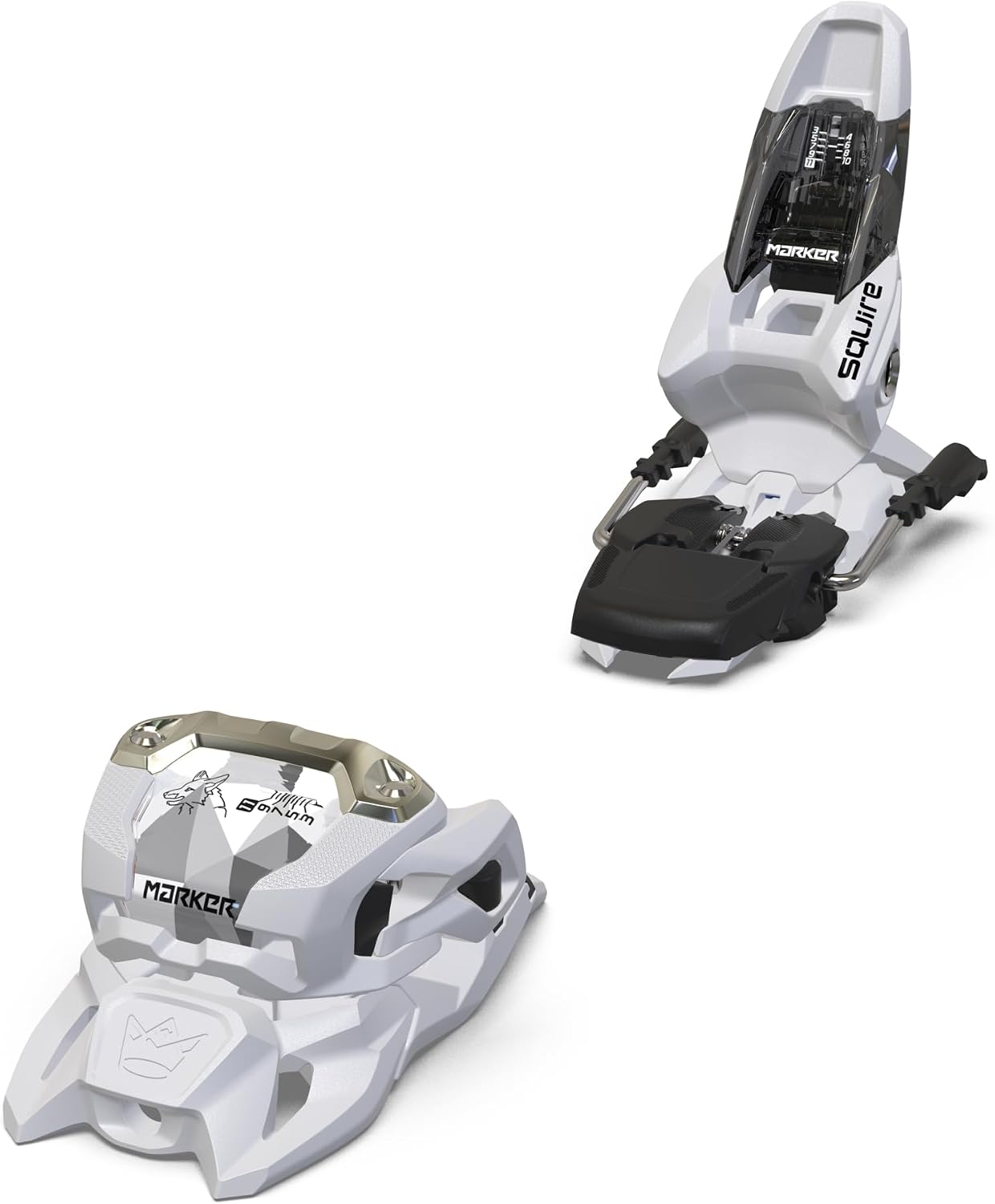
Think of a ski binding as the safety valve on a pressure cooker. When everything’s right, it holds firm under enormous force. When you fall badly, it releases before your leg takes the damage instead of the equipment. That one mechanical decision — which binding, set to what value — is the difference between a story you tell at the end of a great powder day and a story you tell from a hospital bed. If you’re staring at a binding spec sheet for the first time and wondering why there are so many numbers, acronyms, and compatibility warnings, you’re in the right place. This guide walks through DIN (the standardized release-force scale, named after the German institute that created it), GripWalk sole compatibility, and the key tradeoffs between binding systems — so that by the end, you’ll know exactly what to buy and why.
This isn’t a beginner’s gear list. You’ve been on snow, you know what a heel piece is, and you’ve probably already argued with a boot fitter about whether your DIN is set too low. What you might not have is a clear mental model of how these systems interact — and where the real risk of a bad decision lives. Let’s fix that.
What DIN Actually Means — And Why Your Number Matters More Than You Think
DIN, properly called the ISO 11088 standard per the International Organization for Standardization’s alpine ski-binding documentation, is a numeric scale that describes the release force threshold of a binding. Lower numbers release easier; higher numbers hold tighter. The scale typically runs from 0.75 at the soft end to 20 at the stiff, competition-level end, though most recreational bindings max out at 12–14.
Your DIN setting is calculated from a combination of four inputs: your weight, your height (used as a proxy for leverage/leg length), your boot sole length, and your skier type — a self-assessed code from Type 1 (cautious, prefers easy releases) through Type 3 (aggressive, prefers retention). The resulting number comes from lookup tables defined in ISO 11088:2018.
Why this matters in practice: Most intermediate-to-advanced skiers land somewhere between DIN 7 and 12. The mistake practitioners make isn’t picking a wildly wrong number — it’s the directional error. Skiing a DIN that’s 1.5–2 points too low for your actual skiing style produces pre-releases: your binding pops open on a hard-carved turn or a bumpy landing, not because you fell, but because the forces briefly exceeded a threshold set for a gentler skiing style. Pre-releases are their own injury risk. Ski Magazine’s DIN guide notes that pre-release on hard snow is one of the most common causes of intermediate skier knee injuries — more common than failure-to-release. The binding opened when it shouldn’t have, and the resulting asymmetric load was enough to do damage.
Conversely, skiing too high a DIN — bumping it up two points because you “ski hard” and don’t want pre-releases — means the binding may not release in a genuine fall. That’s the traditional ACL mechanism the whole system was designed to prevent.
The certified shop calibration step is not optional. Bindings need torque-tested at installation. A binding set at DIN 9 on paper that hasn’t been function-tested may release at effective DIN 7.5 or DIN 11 depending on spring fatigue, mounting depth, and sole wear. Per ISO 11088 assembly guidelines, inspection is required annually or whenever boot sole length changes by more than 5mm.
GripWalk, Alpine, and the Sole Compatibility Maze
Here’s where a lot of intermediate buyers get tripped up in 2025–2026: the modern boot market has fractured into multiple sole standards, and not all of them play nicely with all bindings.
Alpine (ISO 5355) is the traditional standard — flat toe and heel lugs, what every alpine binding was designed around for decades. If your boot has a flat sole and your binding is a standard alpine frame binding (think Marker Griffon, Tyrolia Attack, Salomon Warden), you’re in clean, compatible territory.
GripWalk (ISO 23223) adds a rockered, walking-friendly sole profile — rounded at the toe and heel — that makes hiking the flats between runs dramatically more comfortable. Introduced commercially around 2018, it became nearly standard on mid-to-high-end all-mountain boots by 2023. The problem: GripWalk soles are not fully compatible with standard alpine bindings without a dedicated adapter or a binding that explicitly supports the standard. Teton Gravity Research’s GripWalk compatibility guide describes several field cases where GripWalk boots mounted in non-compatible bindings produced toe-piece pre-release because the rounded toe lug didn’t seat properly against a flat ISO 5355 toe piece.
What to look for: Bindings certified for GripWalk will say so explicitly — typically marked “MNC” (Multi-Norm Compatible) on the binding itself or in the spec sheet. Marker’s MNC line, Tyrolia’s FreeFlex series, and Salomon’s MNC-suffixed bindings all support both sole standards. If you’re buying boots and bindings separately — especially online — confirm the sole standard on your boot and the compatibility spec on your binding before you check out.
The touring-adjacent wrinkle: If you’re on a freeride setup that includes a WTR (Walk-To-Ride) sole, compatibility gets even more specific. Bindings like the Salomon Shift and Marker Duke PT accept WTR geometry because they were designed around it. Mounting a WTR sole into a standard MNC binding can still produce fit issues — the Ski Magazine tech notes and Powder Magazine’s binding tech explainer both flag WTR as a distinct third category that requires explicit certification, not just GripWalk clearance.
Frame vs. Plate vs. Tech: Choosing the Right Release Architecture
Beyond DIN and sole standards, the fundamental architecture of the binding changes the character of the release and the feel underfoot. These are the three categories you’re actually choosing between:
Frame bindings (Marker Griffon, Salomon Warden, Tyrolia Attack) mount a traditional toe and heel piece to the ski independently. They’re affordable, widely available, easy to service, and use the standard ISO 11088 DIN calculation directly. For resort charging and sidecountry — anything where you’re in ski mode the vast majority of the time — frame bindings remain the workhorse choice. The Tyrolia Attack² 13 GW and Marker Griffon 13 ID consistently appear in Outside Online’s best-binding roundups as the value sweet spot in the $200–$280 range, with DIN ranges wide enough to cover everyone from intermediate to aggressive advanced skiers.
Plate/integrated systems (Look Pivot, Rossignol FKS, some Atomic setups) mount via a base plate that runs underfoot, moving the toe and heel pieces as a unit. The Pivot in particular has a devoted following among park and big-mountain skiers who cite its long-established direct-to-ski elasticity — the binding’s toe piece rotates rather than sliding, which many skiers describe as a more confidence-inspiring feel on ice and hardpack. Owners across aggregated long-run reviews consistently report that the Pivot’s release character feels more predictable in hard-skiing situations than frame alternatives at similar price points. Trade-off: Pivots require certified mounting, don’t accept GripWalk soles without an adapter plate, and carry a price premium ($380–$480 depending on model).
Tech bindings (Dynafit Speed, G3 Ion, Salomon MTN) use pin-style toe and heel pieces that engage directly with fittings in a touring boot. Dramatically lighter than frame or plate systems — the Dynafit Speed Radical tips the scale under 350g per pair versus 1,100–1,400g for frame bindings — but the release characteristics are different. Tech bindings release laterally at the toe in a fundamentally different motion than alpine bindings, and the DIN equivalency published by manufacturers is not directly comparable to ISO 11088 alpine DIN values. Per Powder Magazine’s binding tech coverage, several ski patrollers and guides explicitly recommend that skiers new to tech bindings discuss release settings with a certified bootfitter rather than self-selecting a number from alpine DIN charts. The G3 Ion and Dynafit Beast series add alpine-style lateral heel release to improve the release profile, but they do so at significant weight cost — putting them in a hybrid category sometimes called “free-touring” bindings.
By the Numbers
| Binding Type | Typical Weight (pair) | DIN Range | GripWalk Ready | Price Range (2026) |
|---|---|---|---|---|
| Frame (Marker Griffon 13 GW) | ~1,150g | 3–13 | Yes (GW model) | $220–$280 |
| Plate (Look Pivot 15 GW) | ~1,250g | 6–15 | Yes (GW model) | $400–$480 |
| Tech (Dynafit Speed Radical) | ~345g | 5–10 equiv. | No (requires touring boot) | $380–$440 |
| Hybrid Tech (G3 Ion 12) | ~890g | 6–12 equiv. | No | $550–$620 |
Weights from published manufacturer specs. Prices reflect typical authorized-retailer pricing as of spring 2026 — end-of-season closeout windows (April–June) can reduce frame binding prices 20–35%.
The Decision Framework: If X, Then Y
This is where the practitioner-level thinking comes together. You’re not buying the “best binding” in the abstract — you’re buying the right binding for your specific boot, your skiing style, and your terrain mix.
If you ski 90%+ resort and sidecountry, own a GripWalk boot, and want uncomplicated: A frame MNC binding in the DIN 10–13 range is the right call. The Marker Griffon 13 GW and Tyrolia Attack² 13 GW both cover this ground reliably and are available at certified shops for ~$250. Have them mounted and DIN-verified professionally.
If you ski hard, charge resort groomers and steeps, and want the most confidence-inspiring release feel on ice: Look at the Look Pivot 15 GW. Owners consistently describe it as the binding that “disappears” underfoot — you stop thinking about the binding and start thinking about skiing. The price premium over a Griffon is real, but for daily aggressive skiers it’s a reasonable long-term investment. Check whether your boot needs the GripWalk adapter plate (most post-2022 boots will).
If you’re building a freeride/resort setup and want the option to occasionally skin to a sidecountry zone without switching bindings: The Salomon Shift or Marker Duke PT is the answer. They’re heavier than pure tech bindings, more expensive than frame bindings, but they’re the only credible crossover option that releases like an alpine binding and skins like a touring binding. Outside Online’s 2025 binding roundup rates the Shift as the top crossover option for exactly this use case.
If you’re a committed ski tourer or splitboard-adjacent backcountry traveler: You’re in tech binding territory, and the DIN-equivalency question becomes a conversation with your bootfitter and, frankly, a reflection of your avalanche terrain exposure. The G3 Ion 12 adds a lateral heel release step that many guides and mountain professionals treat as a meaningful safety upgrade over pin-only systems. Teton Gravity Research’s gear coverage has consistently flagged the improved release profile of hybrid tech bindings for consequence terrain.
The one rule that applies to everyone: Don’t set your own DIN by feel. Get it calculated from the ISO 11088 chart using your actual weight, height, boot sole length, and honest skier type, then have a certified technician torque-verify the setting. Bindings are not a calibrate-once-and-forget component — check them at the start of every season, and any time your boot changes. The 20-minute shop visit is the cheapest insurance in skiing.